
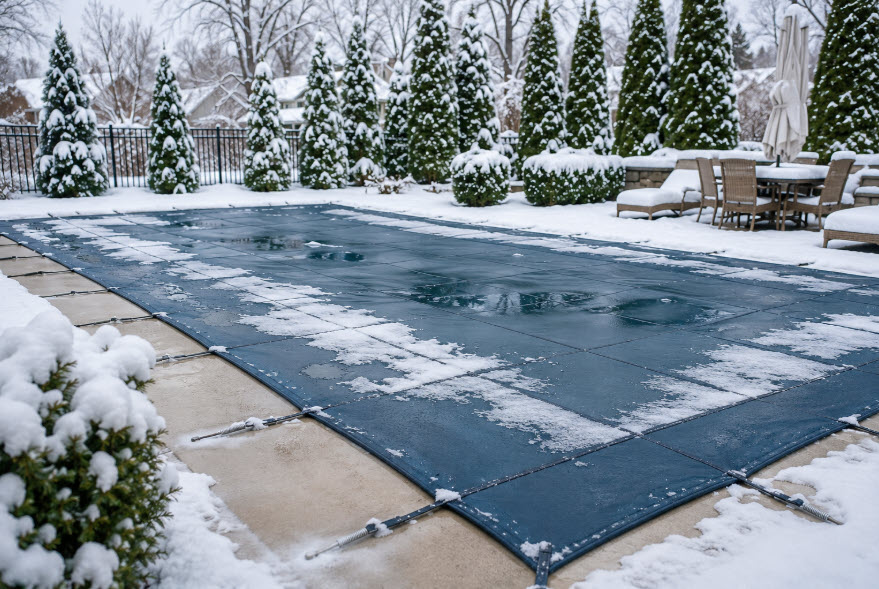
Knowing how to winterize a pool in Vermont is essential for protecting your pool, plumbing, pump, filter, and other equipment from months of freezing temperatures, snow, and ice. A proper pool closing does more than put a cover over the water—it prepares the entire pool system to safely withstand a Vermont winter.
For homeowners in Milton, Burlington, Colchester, Essex, St. Albans, and surrounding Vermont communities, timing and proper winterization are especially important. Water left inside plumbing or equipment can freeze, expand, and potentially damage lines and components. Improperly balanced or dirty pool water can also make your spring opening much more difficult.
The basic process for winterizing a pool in Vermont includes cleaning and balancing the water, removing accessories, lowering the water to the appropriate level when required, winterizing the plumbing and equipment, adding appropriate winter chemicals, and securing the pool with a winter cover.
Here’s how to do it correctly—and when it makes sense to call a professional.
When Should You Close a Pool in Vermont?
One of the most common questions Vermont pool owners ask is:
When should I winterize my pool?
You don’t necessarily want to close your pool at the first cool September night.
Avalon generally recommends closing once nighttime temperatures are consistently below 50°F. Cooler water helps slow biological activity and can make it easier to keep the pool in good condition while it’s closed.
At the same time, you don’t want to wait so long that you’re scrambling to winterize when a hard freeze is approaching.
For many Vermont homeowners, pool closing happens during the September-to-October timeframe, but weather conditions, pool type, equipment, and location should ultimately determine your schedule.
The goal is simple: close late enough that the water has cooled, but early enough to protect the system before sustained freezing weather arrives.
Why Is Pool Winterization So Important in Vermont?
Vermont’s winters make proper pool closing more than routine maintenance.
When water freezes, it expands. If water is trapped inside your pool’s plumbing, pump, filter, heater, or other components, that expansion can cause significant damage.
Proper winterization helps protect against:
- Cracked or damaged plumbing
- Pump and filter damage
- Freeze-related equipment problems
- Algae growth
- Staining and scale
- Damage from accumulated debris
- Winter cover problems
- A difficult and expensive spring opening
Avalon’s professional pool maintenance process includes lowering water to appropriate levels, blowing out plumbing lines, removing accessories, and securing the pool for winter.
A good closing isn’t just about surviving winter. It’s also about making your pool opening next spring much easier.
Step 1: Clean the Pool Thoroughly
Don’t close a dirty pool and expect it to look better six months later.
Before winterizing, remove leaves, insects, dirt, and other debris from the pool.
A thorough pre-closing cleaning should include:
Skim → Brush → Vacuum → Empty baskets → Clean filtration components as appropriate
Pay particular attention to the floor, walls, corners, steps, and areas where debris tends to accumulate.
Organic material left in the water can contribute to staining and water-quality problems while the pool sits covered.
Think of winterization as putting the pool into hibernation.
The cleaner it is going in, the better your starting point should be when it’s time to reopen.
Step 2: Test and Balance Your Pool Water
One of the most important—and frequently overlooked—pool closing tips is to balance the water before winterizing.
Test important water chemistry parameters such as:
- pH
- Total alkalinity
- Sanitizer
- Calcium hardness
- Other parameters required for your particular pool surface or sanitation system
The correct ranges can vary depending on pool type, surface, equipment, sanitizer, and the winterizing products being used. Follow the recommendations for your pool and chemical system rather than blindly adding a generic closing kit.
Avalon Pools & Spas provides professional water testing and pool chemicals in Milton, VT, which can be particularly useful before closing.
Instead of guessing what the pool needs, test first and treat based on the results.
Step 3: Add the Appropriate Winterizing Chemicals
Once the water is properly balanced, it’s time to prepare it for the months ahead.
Depending on your pool and water-care system, your winter closing process may include products designed to help maintain sanitizer levels and control algae or other water-quality problems while the pool isn’t circulating normally.
However, more chemicals aren’t automatically better.
Follow the instructions for the specific products you’re using, and make sure they’re compatible with your pool surface, sanitizer, and equipment.
If you’re uncertain about what your water needs, bring a sample to a pool professional before closing.
Avalon carries pool water-care products and can help Vermont homeowners determine which products are appropriate for their pool.
Step 4: Lower the Water Level If Required
Should you drain your pool for winter?
Usually, you should not completely drain a permanent swimming pool simply because winter is coming.
The appropriate water level depends on the type of pool, plumbing, skimmer protection method, liner or surface, and winter cover.
Avalon’s pool-closing service can lower the water level when necessary as part of winterization.
This is an area where following instructions specific to your pool is especially important. Removing too much—or too little—water can create its own problems.
If you’re unsure, consult a professional before draining.
Step 5: Winterize the Pool Plumbing Lines
This is arguably the most important step for Vermont pool owners.
Water left inside plumbing can freeze and expand during winter. That’s why properly winterizing the lines is critical in cold climates.
Depending on the system, the process can involve:
- Lowering the water as appropriate.
- Blowing water out of plumbing lines.
- Plugging or protecting lines against water re-entry.
- Winterizing skimmers and returns as appropriate.
- Following manufacturer procedures for specialized equipment.
Avalon’s Vermont pool-closing service includes blowing out lines as part of winterizing the system.
If you’re uncomfortable working with your pool’s plumbing or aren’t confident that you’ve removed the water correctly, this is one part of DIY pool closing where hiring a professional can be worth it.
A little water left in the wrong place can become a much bigger issue once Vermont temperatures fall below freezing.
Step 6: Winterize the Pump, Filter and Other Equipment
Your pool isn’t properly winterized until the equipment is protected too.
Depending on your system, you’ll need to properly shut down and drain components such as the:
- Pool pump
- Filter
- Heater
- Chlorinator
- Saltwater system
- Other water-containing equipment
Filters require different winterization procedures depending on whether you have a sand, cartridge, or DE filter, so follow the manufacturer’s instructions for your equipment.
Avalon services multiple filtration systems and provides filter media changes and other pool equipment services in Milton.
Don’t assume that turning the equipment off is the same thing as winterizing it.
In Vermont, removing trapped water is the critical part.
Step 7: Remove and Store Pool Accessories
Take a walk around your pool before installing the winter cover.
Remove seasonal accessories as appropriate, including:
- Ladders
- Handrails when designed to be removed
- Skimmer baskets
- Cleaning equipment
- Toys and floats
- Removable hoses
- Other accessories not intended for winter exposure
Clean and dry equipment before storing it.
For removable or soft-sided above-ground pools, winter storage can require additional steps. Avalon recommends completely cleaning and drying components before storage because trapped moisture can encourage mold, mildew, and liner damage.
Step 8: Install and Secure the Winter Pool Cover
Your winter cover is the pool’s first line of defense against months of Vermont weather.
A properly fitted and secured cover helps keep out leaves, branches, dirt, and other debris while protecting the pool throughout the off-season.
Before covering the pool:
Make sure the water is properly prepared, equipment has been winterized, accessories have been removed, and the cover itself is in good condition.
Then install the cover according to its manufacturer’s instructions.
Throughout the winter, periodically inspect the pool area—particularly after heavy snow, ice, or wind.
Don’t walk on a frozen or snow-covered pool or attempt to clear a cover in a way that could damage it. Follow the cover manufacturer’s instructions for snow and water management.
Inground vs. Above-Ground Pool Winterization
While the basic principles are similar, winterizing an inground pool and winterizing an above-ground pool aren’t identical.
Inground Pools
The process generally places significant emphasis on properly winterizing underground plumbing, equipment, skimmers and returns before installing the winter cover.
Above-Ground Pools
Above-ground pools also need clean and balanced water, winterized plumbing and equipment, and proper cover preparation.
However, some removable above-ground pools are designed to be completely drained, disassembled, dried, and stored for winter.
Avalon recommends that removable above-ground pool components be completely dry before storage, with liners loosely folded or rolled and stored somewhere dry and protected from rodents and extreme temperature fluctuations.
Always follow the manufacturer’s instructions for your specific pool.
Vermont Pool Closing Checklist
Before you call your pool officially closed for winter, run through this list:
Water & Pool
- Remove leaves and debris
- Brush walls and floor
- Vacuum the pool
- Test water chemistry
- Balance water as required
- Add appropriate winterizing chemicals
- Lower water to the appropriate level if required
Plumbing & Equipment
- Blow out and winterize plumbing lines
- Protect skimmers and returns
- Drain the pump
- Properly winterize the filter
- Winterize the heater if applicable
- Follow shutdown procedures for salt or sanitation systems
- Remove and store appropriate accessories
Final Protection
- Install the winter cover correctly
- Secure the cover
- Store chemicals safely according to label instructions
- Store removable equipment appropriately
- Inspect the pool periodically throughout winter
Common Pool Closing Mistakes to Avoid
Closing the Pool Too Early
Closing while the water is still warm can make it harder to maintain good water quality throughout the off-season.
Waiting Until After a Freeze
Don’t let the first serious cold snap remind you that there’s still water sitting inside your pool equipment.
Closing Dirty Water
Leaves, algae, dirt, and other organic material don’t disappear because you put a cover over them.
Forgetting the Plumbing
This is a big one in Vermont. A pool can look perfectly winterized from above while water remains trapped inside the plumbing.
Completely Draining the Pool Without Proper Guidance
More draining isn’t necessarily better. The appropriate winter water level depends on your particular pool.
Ignoring the Pool Until Spring
Periodically inspect your cover and pool area throughout winter, especially after major Vermont storms.
Can You Winterize a Pool Yourself?
Yes, many experienced pool owners handle their own seasonal closing.
If you understand your pool’s plumbing, filtration system, equipment, water chemistry, and winterization requirements, a DIY pool closing may be manageable.
But Vermont’s freezing temperatures make mistakes potentially expensive.
Consider professional pool closing service if:
- It’s your first year owning the pool
- You’re unsure how the plumbing is configured
- You don’t know how to blow out the lines
- You have a heater or more complicated equipment
- You’ve had freeze damage before
- You’re unsure how much water to remove
- You simply don’t want to spend a fall weekend doing it yourself
The biggest reason to hire a professional isn’t convenience alone.
It’s confidence that water hasn’t been left somewhere it can freeze.
When Should You Schedule Professional Pool Closing in Vermont?
Don’t wait for the first freeze to call.
Fall is naturally a busy season for pool closing companies in Vermont, so schedule service ahead of the window when you expect your pool to close.
Avalon Pools & Spas offers professional pool opening and closing services from its location at 332 US-7 in Milton, Vermont. Its closing process includes winterization steps designed to protect pools and equipment through the colder months.
For homeowners searching for pool closing near Milton, VT, pool winterization near Burlington, or professional pool service in the surrounding area, having an experienced local team can take the guesswork out of preparing for winter.
Frequently Asked Questions About Winterizing a Pool in Vermont
When should I winterize my pool in Vermont?
Avalon recommends closing a pool when nighttime temperatures are consistently below approximately 50°F, while still completing the process before sustained freezing weather creates a risk to plumbing and equipment.
Do I need to drain my pool completely for winter?
Generally, permanent pools are not completely drained solely for winterization. The correct water level depends on your pool, cover, skimmer setup, surface, and winterization method. Follow your manufacturer’s instructions or ask a pool professional.
What happens if you don’t winterize a pool in Vermont?
Water left in plumbing and equipment can freeze and expand, potentially damaging lines and components. Poor winter preparation can also contribute to water-quality problems, staining, debris accumulation, and a more difficult spring opening.
Do you need chemicals when closing a pool?
Your pool should be tested and properly balanced before closing, and your winterization process may include additional products based on the pool and water-care system. Avoid blindly adding chemicals; test the water and follow product and manufacturer instructions.
How do I keep my pool from turning green over the winter?
Start with a thoroughly cleaned pool and properly balanced water, use appropriate winterizing products, secure the cover, and time the closing appropriately. Opening before warming water encourages significant algae growth can also help.
Should pool lines be blown out for winter?
In freezing climates such as Vermont, removing water from vulnerable plumbing is a critical part of winterization. Avalon includes blowing out lines as part of its professional fall pool-closing process.
How much does pool closing cost in Vermont?
Pool closing prices vary based on pool size, type, equipment, plumbing complexity, water lowering requirements, and additional services. Request a quote based on your specific pool rather than relying on a generic statewide price.
Where can I find pool closing service near Burlington, VT?
Avalon Pools & Spas provides professional pool opening and closing services from its Milton, Vermont location and serves surrounding communities. The company also provides residential pool maintenance, repairs, water-care products, and other seasonal pool services.
Protect Your Pool Before the Vermont Freeze
Learning how to winterize a pool in Vermont comes down to protecting three things: the water, the equipment, and—most importantly—the plumbing.
Clean and balance the pool before closing. Winterize the lines and equipment thoroughly. Use the correct water level and winterizing products for your pool. Remove seasonal accessories. Secure the cover. Then periodically check everything throughout the winter.
Taking the time to close your pool correctly can help prevent freeze-related problems and give you a much better starting point when warm weather finally returns.
For homeowners who would rather leave the process to experienced professionals, Avalon Pools & Spas in Milton, VT offers professional pool closing and winterization services, along with pool chemicals, water testing, maintenance, and repairs.
And when Vermont finally decides winter is over? Avalon can help open it back up again, too.