
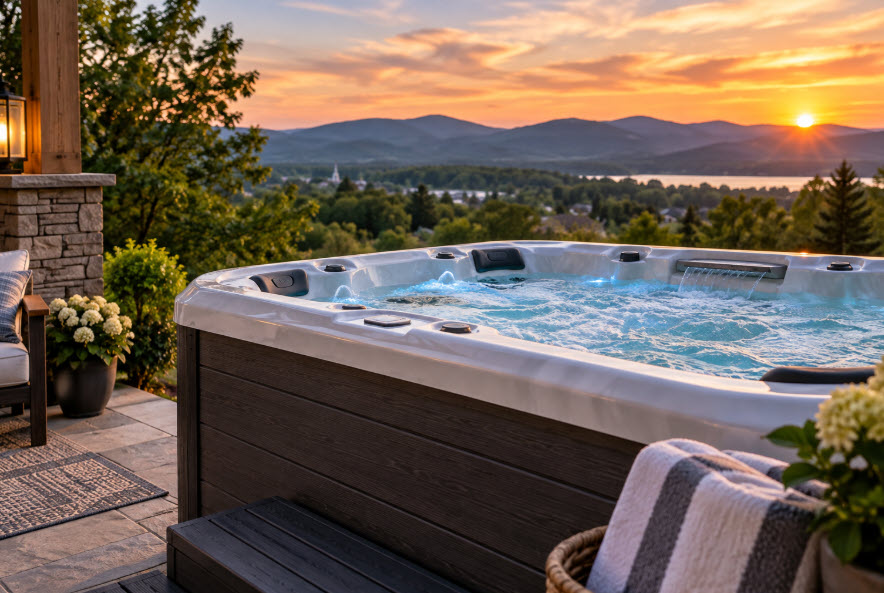
Keep your hot tub from freezing during a Vermont winter by keeping it powered, heated, covered, and circulating. Freeze protection only works when the spa has electricity and water can move through the plumbing. Check the water level, GFCI, cover, equipment area, and circulation regularly, especially before subzero weather, ice storms, or extended power outages.
Key Takeaways
- Keep the hot tub powered and circulating. Built-in freeze protection cannot protect the plumbing if the spa loses electricity or water stops moving.
- Check the GFCI after storms and during extreme cold. A tripped breaker can quietly leave your spa without heat or circulation.
- Keep the insulated cover closed and secure. A properly fitted cover slows heat loss and helps protect the water during outages.
- Maintain the correct water level. Low water can interfere with circulation and reduce the effectiveness of freeze protection.
- Act quickly if the spa loses power. Keep the cover closed, determine why power was lost, and contact a spa professional if an outage may be prolonged.
- Do not simply drain a hot tub during subzero weather. Water left inside pumps, heaters, jets, or plumbing can freeze. Proper winterization requires clearing the lines.
Why Do Hot Tubs Freeze in Vermont?
Hot tubs freeze when water inside the spa or its plumbing is exposed to freezing temperatures long enough to turn to ice. In a running hot tub, this usually happens because heating or circulation has stopped rather than because the outdoor temperature is simply cold.
That distinction matters in Northwest Vermont. A properly operating spa is designed to handle cold weather, but subzero nights, wind off Lake Champlain, heavy snow, ice storms, and extended power outages can quickly turn a small problem into a much bigger one.
Common causes of winter freeze problems include:
- A power outage during extreme cold
- A tripped GFCI or breaker
- A failed circulation pump or heater
- Water dropping below the required operating level
- A clogged filter restricting water flow
- A damaged or poorly fitted cover allowing rapid heat loss
- Snow or ice blocking equipment areas or vents
- A plumbing leak that causes the water level to fall
Rural Vermont properties deserve extra attention. A hot tub may sit farther from the house, making it easier to miss a warning light, tripped breaker, or change in water temperature. Electrical issues can also be more complicated on properties with older panels or long electrical runs.
How Does Hot Tub Freeze Protection Work?
Hot tub freeze protection typically monitors conditions and automatically activates pumps or heating functions when temperatures get too low. The exact operation varies by manufacturer and model, so always check your owner’s manual for the settings and behavior of your specific spa.
The most important thing Vermont owners need to understand is this: freeze protection requires power and functioning equipment.
If your GFCI has tripped, your home has lost power, a pump has failed, or water is not circulating properly, the spa’s built-in freeze protection may not be able to do its job.
This is one reason Avalon carries hot tubs designed for cold-climate use with features such as full-foam insulation, freeze protection technology, insulated covers, and weather-resistant cabinetry. Owners comparing models can also review Avalon’s guide to choosing the right hot tub before purchasing a spa for year-round Vermont use.
How to Keep Your Hot Tub From Freezing: Step-by-Step
The best hot tub freeze protection strategy is to prevent interruptions to heat and circulation before temperatures become dangerously cold. During a Vermont winter, make these checks part of your normal spa routine.
- Keep the spa powered. Do not shut off power to a filled hot tub during winter unless it is being properly winterized.
- Verify the water is heating and circulating. Don’t assume everything is working because the control panel is illuminated. Check that the water temperature is where you expect it to be and that circulation is occurring normally.
- Maintain the proper water level. Low water can interfere with normal circulation. Check the level more frequently during periods of regular winter use.
- Keep the cover closed and secured. Open the spa when you are using it, then replace and lock the insulated cover promptly to reduce heat loss.
- Remove heavy snow from the cover. Vermont storms can put substantial weight on a spa cover. Carefully clear accumulated snow rather than allowing repeated storms to build up on top.
- Keep the equipment area accessible. Don’t allow plowed or shoveled snow to pile against the spa cabinet. Watch for snow-blocked equipment vents and ice dams forming around the base of the cabinet.
- Check the GFCI regularly. After an ice storm, outage, or electrical event, verify that the hot tub actually has power rather than assuming it restarted normally.
- Pay attention to unusual behavior. Falling temperatures, weak water flow, error codes, unusual pump noises, or repeated breaker trips deserve attention before the next subzero night.
If you enjoy using your spa throughout the season, see Avalon’s guide to using a hot tub in freezing weather for winter soaking advice.
What Should You Do If Your Hot Tub Loses Power in Winter?
If your hot tub loses power during freezing weather, keep the cover closed, confirm whether the problem affects the house or only the spa, and avoid unnecessary heat loss while you determine what happened.
Start by checking whether your home has lost electricity. If other circuits are operating, check whether the spa’s GFCI or breaker has tripped. Do not repeatedly reset a breaker that immediately trips again. That can indicate an electrical or equipment problem that needs professional attention.
If the outage affects the entire property, leave the hot tub covered. Every time you open the cover, stored heat escapes faster.
For Vermont homeowners, the bigger concern is an outage expected to continue through very cold temperatures. Ice storms can cause outages lasting far longer than a brief interruption, particularly in rural areas of Chittenden and Franklin Counties.
While you wait for power to return:
- Keep the cover closed and strapped down. Don’t open it to check the water.
- If a waterlogged or cracked cover is letting heat escape, lay a heavy blanket or tarp over it as a temporary extra layer.
- Don’t put space heaters, heat lamps, or open flames in or near the equipment compartment.
- If you have a generator, only power the spa through a setup installed by a licensed electrician. Never use an extension cord or backfeed a hot tub circuit.
- Once power is back, confirm the GFCI reset and the pumps are actually circulating before you walk away.
If you believe the spa could be without power for an extended period, call Avalon at 802-893-8900 for guidance based on your spa and the conditions. If shutting the spa down becomes necessary, don’t simply drain it and walk away. Water can remain trapped in plumbing and equipment. Follow the proper process for winterizing a spa for a Vermont winter, including clearing the plumbing.
What Should You Do If Your Hot Tub GFCI Trips in Freezing Weather?
A tripped GFCI in winter should be treated as a time-sensitive problem because the hot tub may no longer be heating or circulating. First, confirm that the spa has actually lost power and check the breaker or GFCI according to your owner’s manual.
If the GFCI resets and the spa resumes normal operation, continue monitoring the water temperature and circulation. If it trips again, do not keep resetting it repeatedly.
Repeated trips can signal an electrical or equipment issue. Contact a qualified professional to diagnose the problem. Avalon provides hot tub maintenance and repair services, including repairs involving spa pumps, heaters, and plumbing leaks.
What Are the Signs Your Hot Tub Is Starting to Freeze?
Falling water temperature, reduced circulation, unusual pump behavior, error messages, and ice forming where it normally would not are warning signs that your hot tub may be at risk of freezing.
Watch for:
- Water temperature dropping unexpectedly
- No visible or noticeable circulation
- Weak flow from jets
- Pumps running abnormally or not running
- Control-panel error codes
- Repeated GFCI trips
- Ice forming around plumbing or equipment areas
- A sudden drop in water level that could indicate a leak
- Unusual sounds from the pump or equipment compartment
If you suspect water has already frozen inside a pump, heater, or plumbing line, don’t force equipment to run. Ice expands and can crack plumbing and damage components.
How Long Can a Hot Tub Go Without Power in Freezing Temperatures?
There is no single safe number of hours a hot tub can remain without power in freezing weather. A well-insulated, covered spa filled with hot water may retain heat for some time, but the actual window depends heavily on the outdoor temperature, wind, insulation, cover condition, starting water temperature, and spa design.
A short outage on a relatively mild winter day is very different from an extended outage during a windy, subzero Vermont night.
Rather than relying on a universal countdown, monitor the situation and respond based on conditions. The colder it is and the longer power remains off, the more urgent the situation becomes.
Well-insulated models can provide an advantage in Vermont’s climate. For example, homeowners looking for premium options can explore Artesian Elite spas. Avalon also carries DreamMaker plug-and-play spas with durable rotomolded shells and TidalFit Swim Spas for year-round use.
Why Does Your Hot Tub Cover Matter So Much in Winter?
Your insulated cover is one of the spa’s most important defenses against winter heat loss. When temperatures fall, the cover helps retain the heat already stored in hundreds of gallons of water.
A winter-ready cover should fit correctly, close completely, and remain secured during wind and storms. Inspect it for damage and remove heavy snow before excessive weight accumulates.
Also check around the cabinet after storms. Snow piled against equipment areas and ice dams around the base can create additional problems and make emergency access difficult.
Running vs. Winterized: Which Is Right for Your Vermont Hot Tub?
| Option | Best For | Winter Priority |
|---|---|---|
| Keep It Running | Owners who plan to use their hot tub throughout winter | Maintain power, heat, circulation, water level, and a secure insulated cover |
| Properly Winterize It | Owners who will not use the spa for an extended period | Drain and thoroughly clear water from plumbing and equipment using the correct winterization process |
Never confuse draining with winterizing. Simply emptying the visible water from the shell can leave water trapped in pumps, heaters, jets, and plumbing lines, where it can freeze and expand.
Vermont Winter Hot Tub Freeze-Protection Checklist
Use this checklist before major cold snaps, snowstorms, and ice storms.
- Confirm the spa has power
- Confirm the water is heating normally
- Check that water is circulating
- Verify the water level is correct
- Check the control panel for errors
- Make sure the GFCI has not tripped
- Check the insulated cover for proper fit and damage
- Secure the cover before high winds
- Remove excessive snow from the cover
- Keep snow away from equipment vents and access areas
- Check for ice buildup around the cabinet
- Watch for unexplained water loss or plumbing leaks
- Know who to call if power or circulation stops during extreme cold
When Should You Call a Hot Tub Professional?
Call a professional when your hot tub stops heating or circulating, repeatedly trips its GFCI, develops a plumbing leak, shows persistent error codes, or may already have frozen plumbing or equipment. In Vermont winter conditions, waiting can turn a manageable repair into freeze damage.
Avalon Pools & Spas has been family owned since 2000 and provides spa maintenance, winterization, water testing, chemical balancing, and repairs to pumps, heaters, and plumbing leaks. The team also helps first-time spa owners understand how to care for their equipment, an approach customers have described as “no sales pitch, just lots of helpful information.”
Avalon serves homeowners across Northwest Vermont. Learn more about our hot tub dealer serving Chittenden County and our hot tub dealer serving Franklin County.
Frequently Asked Questions About Hot Tub Freeze Protection
At what temperature will a hot tub freeze?
Water can begin freezing when temperatures reach 32°F, but a running hot tub is designed to maintain heated water in much colder outdoor conditions. The greater concern is when heat or circulation stops during freezing weather, especially during prolonged subzero temperatures.
Does hot tub freeze protection work during a power outage?
No. Hot tub freeze protection requires electricity for the controls, pumps, and heating system to operate. During an outage, keep the insulated cover closed and monitor the situation closely, especially during extreme cold.
Should I turn my hot tub off during a Vermont cold snap?
No, not if the hot tub is filled with water and has not been properly winterized. Keeping a filled spa powered, heated, and circulating is an important part of preventing frozen plumbing.
What should I do if my hot tub breaker trips in winter?
Check the GFCI or breaker according to your owner’s manual and determine whether the spa resumes normal operation. If the breaker trips repeatedly, stop resetting it and have the electrical or spa equipment issue professionally diagnosed.
Can I just drain my hot tub if the power goes out?
Not safely in freezing weather unless you also properly clear the plumbing and equipment. Water can remain inside pumps, heaters, jets, and lines after the shell is drained and can freeze, so follow a complete winterization procedure instead.
How long will a hot tub stay warm without power?
There is no universal safe time because heat retention depends on insulation, cover quality, starting water temperature, wind, outdoor temperature, and the spa itself. A covered, well-insulated spa will generally retain heat better, but extended outages during subzero Vermont weather require prompt attention.
Should I remove snow from my hot tub cover?
Yes. Remove heavy accumulated snow carefully so repeated storms do not create excessive weight on the cover. Keep surrounding snow from blocking equipment vents or access panels as well.
Can a frozen hot tub be repaired?
Often, but the extent of the repair depends on what froze and whether expanding ice cracked plumbing, pumps, heaters, or other components. If you suspect freezing, avoid forcing the equipment to operate and have the spa inspected.
Protect Your Hot Tub Before the Next Vermont Freeze
The best time to solve a winter hot tub problem is before the next subzero night. If your spa is losing temperature, struggling to circulate, tripping its GFCI, leaking, or showing other warning signs, don’t wait for the plumbing to freeze.
Call Avalon Pools & Spas at 802-893-8900 or contact the Avalon team. You can also visit the family-owned showroom at 332 US-7 (Route 7), Milton, VT 05468, where multiple spas are on display.
Avalon helps hot tub owners from Milton, Burlington, Colchester, Essex, St. Albans, Georgia, Fairfax, Westford, and communities throughout Chittenden and Franklin Counties keep their spas running through real Vermont winters.