
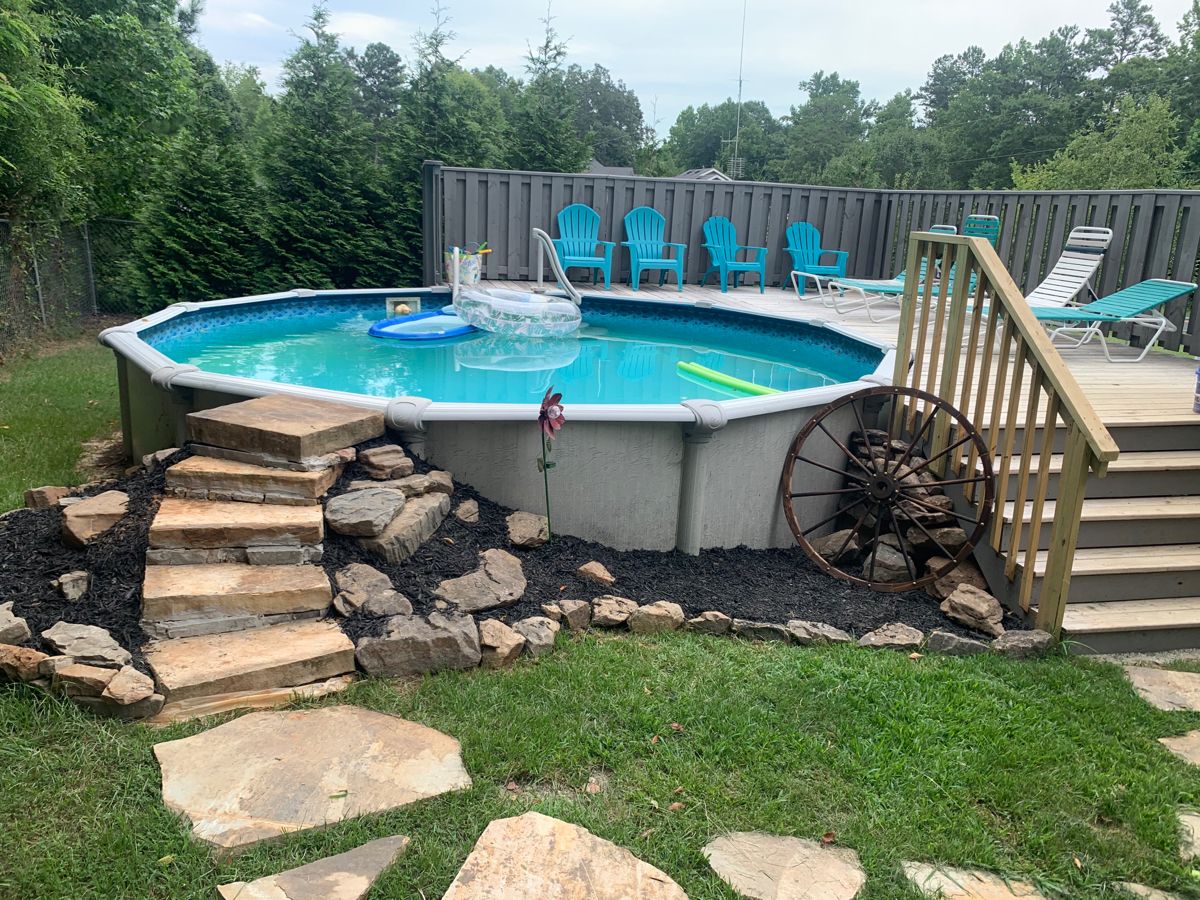
If you’re wondering how to store an above-ground pool for winter, the first step is determining whether your pool is actually designed to be taken down.
Temporary, inflatable and many soft-sided above-ground pools can be drained, cleaned, completely dried, disassembled and stored for winter. Permanent steel-walled above-ground pools, however, are generally designed to remain standing and should be properly winterized rather than completely drained and packed away.
That distinction is especially important in Vermont and other cold climates. Freezing temperatures can damage pumps, filters, hoses and plumbing when water is left where it shouldn’t be—but completely draining the wrong type of pool can create problems, too.
Below, we’ll explain how to store a removable above-ground pool, protect the liner and equipment, and prepare a permanent above-ground pool for winter.
Key Takeaways: Above-Ground Pool Winter Storage
- Identify your pool type first. Don’t assume every above-ground pool should be drained and taken apart.
- Temporary and soft-sided pools: If designed for seasonal storage, these can typically be drained, cleaned, completely dried, disassembled and stored according to the manufacturer’s instructions.
- Permanent steel-walled pools: These generally remain standing and are winterized rather than completely drained.
- Never store a damp pool liner. Moisture trapped in folds and seams can contribute to mold, mildew, odors and staining.
- Drain water from removable equipment. Water left inside pumps, filters, hoses or fittings can freeze and expand.
- Protect liners and hoses from rodents. Months of undisturbed storage can make pool materials vulnerable to pest damage.
- Don’t create unnecessary hard creases in the liner. Follow the manufacturer’s storage instructions and avoid forcing the liner into the smallest possible container.
- Take photos and label parts before disassembly. You’ll appreciate them when it’s time to put the pool back together.
- In Vermont, don’t wait for the first hard freeze. Give yourself enough time to clean, drain and completely dry everything before sustained freezing temperatures arrive.
The most important rule: Don’t completely drain an above-ground pool until you know it is designed for seasonal disassembly. When in doubt, find the manufacturer’s model information before pulling the drain plug.
Should You Take Your Above-Ground Pool Down for Winter?
Not every above-ground pool should be treated the same way.
Here’s a quick starting point:
| Type of Above-Ground Pool | Take It Down for Winter? | Typical Winter Approach |
|---|---|---|
| Inflatable seasonal pool | Usually, if manufacturer directs | Drain, clean, completely dry and store |
| Soft-sided/frame pool designed for seasonal storage | Often | Drain, dry, disassemble and store according to manufacturer instructions |
| Permanent steel-walled above-ground pool | Generally no | Winterize while standing |
| Not sure what type you have | Don’t drain it yet | Find the model/manufacturer instructions or ask a pool professional |
Not sure? Don’t pull the drain plug yet.
Look for the manufacturer’s name, model number or owner’s manual first. Completely draining the wrong type of above-ground pool isn’t something you want to discover was a mistake after the water is gone.
How to Store a Removable Above-Ground Pool for Winter
If you’ve confirmed that your pool is designed to be disassembled and stored seasonally, use these steps as a general guide.
Your pool manufacturer’s instructions should always take priority because disassembly and storage recommendations vary by pool construction and model.
1. Pick the Right Time to Take Down Your Pool
Don’t wait until freezing weather is in the forecast to start.
Taking down a removable pool involves more than simply draining it. You’ll need enough time to clean the pool, disconnect equipment, drain everything and allow the liner and components to dry completely.
For Vermont pool owners, this matters because fall weather can turn cold and damp quickly. A dry stretch of weather can make the process considerably easier.
Plan backward from the first sustained freezing temperatures rather than waiting until the last possible weekend.
2. Take Photos Before Disconnecting Anything
This is one of the easiest things you can do to make your life easier next spring.
Before disconnecting hoses, pumps, filters or frame components, take several pictures with your phone.
Photograph:
- Pump and filter connections
- Hose routing
- Skimmer connections
- Fittings
- Frame configuration
- Anything you’re not 100% confident you’ll remember six months from now
It takes two minutes in the fall and can save a lot of head-scratching during spring setup.
3. Remove and Clean Pool Accessories
Remove appropriate accessories before draining and disassembling the pool.
Depending on your setup, that may include:
- Ladders
- Toys and floats
- Removable skimmers
- Cleaning equipment
- Hoses
- Thermometers
- Other detachable accessories
Clean off dirt, algae and chemical residue and allow everything to dry before putting it into storage.
This is also a good opportunity to inspect accessories for cracks, deterioration or other damage. It’s much easier to replace something during the off-season than discover the problem when you’re trying to reopen the pool.
4. Clean the Pool Before Draining
Remove as much debris as possible while the pool is still assembled.
Skim leaves and debris from the water and clean the floor and sides using methods appropriate for your pool and liner.
Why clean something you’re about to drain?
Because leaves, algae, dirt and other organic material become much more annoying once they’re sitting against an empty liner.
Starting with a clean pool makes the liner-cleaning and drying process much easier.
5. Drain the Pool Correctly
If your pool is designed to be completely drained for seasonal storage, follow the manufacturer’s drainage instructions.
Also consider where the water is going before you begin.
Even a relatively modest above-ground pool can contain thousands of gallons of water. Releasing that water too quickly or into the wrong area can contribute to erosion, flooding or drainage problems.
Follow applicable local requirements for discharging pool water and consider the water chemistry before deciding where it should go.
And remember: only completely drain the pool if it is designed for seasonal disassembly.
6. Disconnect and Drain the Pump, Filter and Hoses
Once the water level allows, disconnect removable circulation equipment according to the manufacturer’s instructions.
That may include:
- Pool pump
- Filter
- Hoses
- Fittings
- Removable skimmer components
- Drain plugs
- Other water-containing equipment
Drain water thoroughly from components before storing them.
This is especially important in Vermont. Water expands when it freezes, so water trapped inside equipment, hoses or fittings can potentially crack or damage components during prolonged freezing weather.
Follow the winter-storage instructions for your specific pump and filter rather than assuming every piece of pool equipment should be stored the same way.
7. Clean the Pool Liner
Once the pool is drained, thoroughly clean the liner before storage.
Remove dirt, algae, grass and other debris using products and cleaning methods appropriate for your liner material.
Pay particular attention to:
- Seams
- Corners
- Folds
- Areas underneath the pool
- Places where organic material has accumulated
Avoid harsh chemicals or abrasive cleaning tools unless the manufacturer specifically approves them for your liner.
Rinse thoroughly when you’re finished.
8. Let the Pool Liner Dry Completely
Do not rush this step.
A liner can look dry while still holding moisture along seams, underneath sections or inside folds.
Packing a damp liner away for months can contribute to:
- Mold
- Mildew
- Musty odors
- Staining
- Material deterioration
Give the liner enough time to air-dry completely.
Reposition it as needed so different sections—and both sides where appropriate—are exposed to air.
If possible, plan your pool takedown around several days of dry weather rather than trying to dry a large liner during a cold, rainy Vermont weekend.
9. Fold or Roll the Liner Carefully
Once you’re confident the liner is completely dry, prepare it for storage according to the manufacturer’s instructions.
Avoid creating unnecessary hard creases or forcing the material into an extremely small package.
Depending on the pool and liner material, loosely folding or rolling sections may help reduce severe creasing.
Don’t place heavy equipment on top of the stored liner.
The goal isn’t to see how tiny you can make the pool. The goal is to protect the material until next season.
10. Store the Pool Somewhere Dry and Protected
The storage environment matters.
Choose an area that is:
- Dry
- Protected from rain and snow
- Protected from rodents and other pests
- Away from sharp objects
- Not prone to flooding or excessive humidity
- Within the manufacturer’s recommended storage conditions
Don’t automatically assume an outdoor shed is the best location simply because it’s covered. Depending on the structure, a shed can still expose materials to extreme temperature changes, moisture and rodents.
Follow the storage recommendations for your specific liner and equipment.
11. Protect Your Pool From Mice and Other Rodents
Pool equipment can sit undisturbed for six months or longer, which gives pests plenty of opportunity to cause damage.
Liners and hoses deserve particular attention.
Use sturdy storage containers where appropriate and keep the surrounding storage area clean. Check stored pool equipment periodically during winter for signs of moisture or pest activity.
Avoid putting pest-control chemicals directly against the pool liner unless the manufacturer confirms they are safe for the material.
12. Label the Parts Before You Put Everything Away
You’ll probably think you’ll remember where every fitting goes.
Spring has a funny way of proving otherwise.
Label containers or bags for:
- Pump components
- Filter components
- Hose fittings
- Skimmer parts
- Drain plugs
- Frame hardware
- Small accessories
If your frame has similar-looking pieces, label those as well.
Pair the labels with the photos you took before disassembly and you’ve essentially created your own personalized spring reassembly guide.
What If You Have a Permanent Above-Ground Pool?
If your above-ground pool is designed to remain standing year-round, don’t use the storage instructions above unless the manufacturer specifically directs you to disassemble it.
Instead, the pool should generally be winterized in place.
Depending on your pool and equipment, that may involve:
- Thoroughly cleaning the pool
- Testing and balancing the water
- Adding appropriate winterizing products
- Adjusting the water level when required
- Winterizing the plumbing
- Draining and protecting appropriate equipment
- Removing seasonal accessories
- Preparing the skimmer and return lines
- Installing and securing an appropriate winter cover
The exact procedure depends on the pool, liner, plumbing, equipment and cover.
For Vermont homeowners, properly protecting plumbing and equipment from trapped water is particularly important because of sustained freezing temperatures.
For a complete walkthrough, read Avalon’s Complete Guide to Winterizing a Pool in Vermont.
What Vermont Pool Owners Often Get Wrong About Winter Storage
After more than two decades serving Vermont pool owners, one of the most important distinctions we make at Avalon Pools & Spas is whether an above-ground pool is actually designed to come down for winter.
A soft-sided seasonal pool and a permanent steel-walled above-ground pool may both be called “above-ground pools,” but that doesn’t mean they should receive the same winter treatment.
Vermont’s climate adds another consideration: water left in the wrong place can become a much bigger problem once temperatures remain below freezing.
Pumps, filters, hoses, plumbing and fittings all have their own vulnerabilities. That’s why “winterizing the pool” shouldn’t be thought of as one single task. You’re preparing an entire system for months of freezing weather.
For pools that are designed to come down, we’d pay particular attention to moisture before storage.
A liner may look dry while still holding moisture along seams, underneath sections or inside folds. Packing everything immediately because the pool is “basically dry” can mean opening that container next spring to find mildew, staining or a musty smell.
Our rule of thumb is simple:
Don’t rush the last 10% of the job.
Cleaning and draining the pool gets most of the attention. But giving the liner enough time to dry, making sure water isn’t trapped inside equipment, protecting materials from rodents and organizing the components for spring can be just as important.
Avalon Pools & Spas has served Vermont pool and spa owners since 2001, and our team brings decades of combined experience to pool maintenance, openings and closings, equipment repairs and seasonal care. (avalonpoolsandspas.com)
The takeaway we’ve learned from Vermont winters is pretty simple:
Get water out of the places where it shouldn’t freeze. Keep moisture out of the things you’re storing. And don’t take apart a pool that was designed to stay standing.
Think About Spring Before You Close the Storage Container
One of the best ways to judge your fall pool-storage job is to imagine what you’ll find when you open everything again next spring.
Ideally, you shouldn’t discover:
- A liner that smells musty because it was stored damp
- Mold or mildew between liner folds
- Mouse damage to a liner or hose
- A cracked component that still contained water
- Missing drain plugs or fittings
- Hardware you can’t remember how to reinstall
- A liner with deep creases from being packed too tightly
- A box of unlabeled parts that no longer make sense
That’s why we recommend thinking about winter storage as preparation for next year’s pool opening, not simply cleanup at the end of this swimming season.
Before you put the final container away, ask yourself:
If I opened this six months from now, would everything inside be clean, completely dry, protected and easy to put back together?
If the answer is yes, you’ve handled many of the most important parts correctly.
Common Above-Ground Pool Winter Storage Mistakes
Completely Draining the Wrong Pool
Don’t assume every above-ground pool should be emptied for winter. Permanent pools generally require a different winterization process.
Storing a Damp Liner
“Almost dry” isn’t the goal. Moisture trapped for months can contribute to mold, mildew, staining and odors.
Leaving Water Inside Equipment
Pumps, filters, hoses and fittings should be prepared according to their manufacturer’s instructions. In freezing climates, trapped water can damage vulnerable components.
Folding the Liner Too Tightly
Don’t force a liner into the smallest container you can find. Follow the manufacturer’s storage recommendations and avoid unnecessary severe creases.
Ignoring Rodents
Stored pool materials can sit untouched for months. Protect them accordingly.
Forgetting How Everything Goes Back Together
Take pictures and label components during disassembly. Five minutes now can save considerable frustration in spring.
Above-Ground Pool Winter Storage Checklist
Before you’re finished for the season, make sure you’ve:
- Identified whether your pool should be stored or winterized while standing
- Checked the manufacturer’s winterization instructions
- Taken photos before disconnecting equipment
- Removed and cleaned appropriate accessories
- Cleaned the pool
- Properly drained a removable pool
- Drained removable equipment as directed
- Thoroughly cleaned the liner
- Allowed the liner to dry completely
- Protected the liner from moisture and rodents
- Stored components in an appropriate location
- Labeled small parts and hardware
- Saved photos of equipment connections and frame assembly
- Properly winterized permanent plumbing and equipment where applicable
Professional Above-Ground Pool Winterization in Milton, VT
Vermont winters aren’t particularly forgiving of shortcuts.
If you’re unsure whether your above-ground pool should come down, how to winterize the equipment or how to protect a permanent pool through freezing temperatures, Avalon Pools & Spas can help.
Located at 332 US-7 in Milton, VT, Avalon provides professional pool openings and closings, maintenance, equipment repair, water care and pool winterization for homeowners in Milton and surrounding Northwestern Vermont communities.
Professional pool closing can be particularly helpful for permanent pools where plumbing, pumps, filtration equipment and other components need to be properly prepared for freezing weather.
Need help getting your pool ready for a Vermont winter? Contact Avalon Pools & Spas in Milton, VT for professional pool closing and winterization service.
Frequently Asked Questions About Above-Ground Pool Winter Storage
Should I take my above-ground pool down for winter?
It depends on the type of pool. Temporary, inflatable and some soft-sided above-ground pools may be designed for seasonal disassembly and storage. Permanent steel-walled above-ground pools are generally winterized while standing. Follow the manufacturer’s instructions for your specific pool.
Should I completely drain my above-ground pool for winter?
Not necessarily. A removable pool designed for seasonal storage may need to be completely drained before disassembly, while a permanent above-ground pool typically requires a different winterization process and generally remains partially filled. Don’t completely drain a pool until you’ve confirmed the correct procedure for your model.
Can I leave an above-ground pool up during a Vermont winter?
Yes, if it is a permanent above-ground pool designed to remain standing. The pool, water, plumbing and equipment must be properly winterized for freezing temperatures. Temporary pools should be handled according to their manufacturer’s seasonal-storage instructions.
How do I store an above-ground pool liner for winter?
Clean the liner, rinse it thoroughly and allow it to dry completely. Fold or roll it according to the manufacturer’s instructions and store it somewhere dry and protected from moisture, rodents and sharp objects.
How do I keep an above-ground pool liner from getting moldy in storage?
Make sure the liner is completely clean and dry before storing it. Pay particular attention to seams, folds and the underside where moisture can remain after the rest of the liner appears dry.
Can I store an above-ground pool in a shed?
It depends on the pool manufacturer’s recommended storage conditions and the environment inside the shed. Outdoor sheds may expose liners and equipment to extreme temperatures, humidity and rodents. Use a dry, protected location that meets the manufacturer’s recommendations.
How should I store my pool pump and filter for winter?
Drain water from removable equipment and follow the pump and filter manufacturer’s winter-storage instructions. Different equipment may require different procedures. In Vermont and other freezing climates, preventing trapped water from freezing inside vulnerable components is especially important.
When should I prepare my above-ground pool for winter in Vermont?
Give yourself enough time to complete the process before sustained freezing weather arrives. Removable pools also need sufficient time to dry completely before storage, so don’t wait until the first hard freeze is in the forecast.
What’s the difference between storing and winterizing an above-ground pool?
Storing typically means draining, disassembling and putting away a temporary pool designed for seasonal use. Winterizing generally means preparing a permanent pool, its water, plumbing and equipment to remain in place through winter.
Does Avalon Pools & Spas close above-ground pools?
Avalon Pools & Spas provides professional pool opening, closing and winterization services from its Milton, Vermont location, along with pool maintenance, water care and equipment repair. Contact the team to discuss your specific pool and winterization needs.
Protect Your Pool Now for an Easier Spring
The right way to prepare an above-ground pool for winter depends on what kind of pool you own.
If you have a removable pool designed for seasonal storage, clean it, drain it according to the manufacturer’s instructions, let the liner and equipment dry completely, and store everything somewhere protected from moisture and pests.
If you have a permanent above-ground pool, don’t simply drain it and take it apart. Follow the appropriate winterization process for the pool, water, plumbing and equipment.
And remember the easiest test:
Will everything you’re putting away today still be clean, dry, protected and easy to reassemble when you open it six months from now?
A little extra care in the fall can mean fewer damaged components, less cleanup and a much easier start to next year’s swimming season.
For pool owners in Milton and surrounding Northwestern Vermont communities, Avalon Pools & Spas can help prepare your pool and equipment for the winter ahead.