
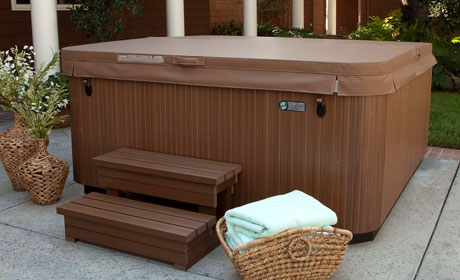
A hot tub should sit on a solid, level, well-drained surface capable of supporting the spa’s full weight when filled with water and people. In Vermont, good options include a properly prepared concrete pad, paver patio, compacted crushed-stone base, or structurally reinforced deck. Avoid placing a hot tub directly on grass, soil, or an unprepared surface.
Key Takeaways
- A hot tub needs a solid, level base that supports its full filled weight. Always use the specific spa’s foundation requirements and filled weight when planning the site.
- Concrete is a popular permanent option, but it is not the only good hot tub base. Properly installed pavers and compacted crushed stone can also work for many spas.
- Do not put a hot tub directly on grass or dirt. Vermont’s rain, mud season, freeze-thaw cycles, and saturated ground can lead to settling and an uneven spa.
- Existing decks need to be evaluated before adding a hot tub. The structure must support the spa, water, occupants, and Vermont snow loads.
- Drainage matters almost as much as strength. Water should move away from the spa instead of pooling, freezing, or saturating the ground around its base.
- Prepare the foundation before scheduling delivery. Avalon can review site considerations and help you plan around the dimensions and requirements of your selected spa.
What Should a Hot Tub Sit On?
The best base for a hot tub is firm, level, stable, well-drained, and designed to support the entire footprint and filled weight of that specific spa. Concrete pads, properly installed pavers, compacted crushed-stone bases, and reinforced decks are common options.
The right choice depends on your property, spa model, budget, drainage, and whether you want a permanent or more flexible installation.
In Vermont, there is another factor: the ground itself. Freeze-thaw cycles, spring mud season, clay soils, ledge, rocky terrain, and poor drainage can all turn a base that looked fine in August into an uneven surface later.
Before building anything, check the manufacturer’s foundation requirements for your exact spa. Improper or uneven support can damage the frame or shell and may affect warranty coverage.
How Much Does a Filled Hot Tub Weigh?
A filled hot tub can weigh several thousand pounds once you combine the spa itself, hundreds of gallons of water, and the people using it. Larger spas and swim spas can weigh considerably more, so use the exact filled weight from the model’s specification sheet when planning a foundation.
Water weighs about 8.3 pounds per gallon. That means 400 gallons of water alone weighs more than 3,300 pounds before adding the dry weight of the spa or anyone sitting in it.
This is why a base that feels firm under your feet is not automatically suitable for a hot tub.
Foundation planning should also consider how the spa’s weight is distributed across its footprint. Don’t use a generic online weight estimate to design a concrete pad, deck, or other structural support. Give your contractor the specifications for the actual model you are purchasing.
If you’re still comparing sizes and models, Avalon’s hot tub and spa lines and hot tub buying guide are good places to start. If weight is a concern for your site, compare lighter DreamMaker Spas with rotomolded shells against larger Artesian models in Avalon’s DreamMaker vs. Artesian comparison.
Is a Concrete Pad the Best Base for a Hot Tub?
A properly designed concrete pad is one of the most stable and durable hot tub foundation options, especially when you want a permanent installation. It provides continuous support beneath the spa and creates a clean, predictable surface for installation and maintenance.
Concrete can be particularly useful on Vermont properties where soft soil or seasonal ground movement is a concern. But simply pouring concrete does not guarantee a good foundation. Site preparation, drainage, soil conditions, reinforcement, and the requirements of the specific spa all matter.
There is no universal concrete thickness that is correct for every hot tub and property. Your contractor should design the pad around the spa specifications and site conditions.
Plan the pad location carefully before construction. Moving it later is not exactly a Saturday-afternoon project.
Can a Hot Tub Sit on Pavers?
Yes, a hot tub can sit on a properly installed paver base if the finished surface is level, stable, and capable of supporting the spa’s full filled weight. Pavers can also blend naturally into an existing patio or backyard design.
The important part is what sits underneath them. Pavers installed over poorly prepared or unstable ground can shift independently as soil settles or freezes and thaws. That movement can eventually create an uneven surface under the spa.
For Vermont installations, proper excavation, base preparation, compaction, drainage, and edge restraint are especially important. If your yard stays wet during spring mud season, address that before placing thousands of pounds of spa on top.
Can a Hot Tub Sit on Gravel?
A hot tub can sit on a properly prepared and compacted crushed-stone base, but it should not simply be placed on loose decorative gravel. The goal is to create a contained, compacted surface that stays level and supports the spa evenly.
A well-prepared crushed-stone base can offer good drainage and may cost less than a permanent concrete pad. It can also be useful on properties where excavation and drainage conditions make other approaches less appealing.
Loose gravel is different. If material shifts under the spa, the foundation can become uneven. The perimeter also needs to stay contained so stone does not migrate outward over time.
Vermont site conditions matter here too. Clay soil, ledge, rocky ground, slopes, and water movement can change how the base should be prepared.
What About Prefabricated Hot Tub Pads?
Prefabricated spa pads can be an option for some hot tubs when the product is compatible with the spa and installed over a properly prepared site. They can reduce the need for a poured concrete surface, but they do not eliminate the need for a stable, level base underneath.
Before choosing one, compare its specifications with the hot tub manufacturer’s foundation requirements. A prefabricated pad should support the full footprint and filled weight of the spa.
Think of the pad as part of the foundation system, not a magic sheet that makes unstable ground stable.
Can You Put a Hot Tub on a Deck?
Yes, a hot tub can go on a deck, but the deck must be structurally capable of carrying the complete load. Existing decks should be evaluated by a qualified contractor or structural engineer rather than assumed to be strong enough.
The calculation needs to account for more than the empty hot tub. It includes:
- The spa’s dry weight
- The weight of the water
- The maximum expected number of occupants
- How the weight is distributed across the deck
- The deck’s existing structure and condition
- Vermont winter snow loads
Older Vermont homes deserve particular attention. A deck that has comfortably supported patio furniture and summer cookouts for 20 years was not necessarily designed to hold a filled hot tub plus several adults and accumulated snow.
Footings also need to be appropriate for Vermont conditions and extend below the applicable local frost line. Confirm footing and structural requirements with your contractor and town rather than relying on a generic depth found online.
For homeowners thinking about the overall backyard layout, Avalon’s deck and backyard design ideas may provide additional inspiration.
Can a Hot Tub Sit on Grass or Dirt?
No, Avalon does not recommend placing a hot tub directly on grass or soil. The ground may look level and firm when the spa is empty, but it can settle or soften under the weight of a filled hot tub.
Vermont makes this particularly risky. Spring snowmelt and rain can saturate soil, while repeated freeze-thaw cycles can move poorly prepared ground. The result may be uneven settling that puts stress on the spa’s frame and shell.
Grass and soil also make drainage and maintenance around the cabinet more difficult.
If the location is currently lawn, prepare a proper foundation before the spa arrives rather than hoping the ground will stay put.
Do Swim Spas Need a Different Foundation?
Swim spas require especially careful foundation planning because they are larger and substantially heavier when filled. The foundation should be designed around the exact requirements and filled weight of the model being installed.
A TidalFit Swim Spa should not be treated as simply a longer hot tub when planning the site. Give the model’s specification sheet to the contractor responsible for the foundation so the base is designed for the actual equipment.
Access also becomes more important with larger units. Avalon coordinates delivery through a trusted third-party spa moving company, and larger spas may need more clearance than a typical hot tub.
How Do Vermont Winters Affect Your Hot Tub Base?
Vermont’s freeze-thaw cycles can move poorly prepared foundations, while snow, ice, and drainage problems can make an otherwise good hot tub site difficult to use. The best foundation plans for all four seasons, not just delivery day.
Frost Heave and Settling
Water in the ground can freeze, expand, and contribute to movement. When conditions thaw, poorly prepared areas can settle unevenly. Proper site preparation helps reduce the risk of that movement affecting the spa.
Drainage and Ice
Water should drain away from the spa rather than pool around its base. Standing water can contribute to saturated soil, ice buildup, settling, and moisture around the cabinet.
Remember that water also gets splashed out during normal use. Plan where it will go in January as well as July.
Snow Load
If your spa is installed on a deck, winter snow becomes part of the structural conversation. The deck must safely support the spa installation along with applicable snow loads.
Winter Access
Consider the walk from your house to the hot tub. A shorter, safer route is a lot more appealing on a February night than crossing an icy backyard in a bathrobe.
Avoid placing the spa where snow or ice can slide directly from the roof onto the tub or people using it. For additional cold-weather planning, see Avalon’s guide to keeping a hot tub from freezing in Vermont.
Concrete vs. Pavers vs. Gravel vs. Deck: Which Hot Tub Base Is Best?
There is no single best foundation for every property, but every good option has the same fundamentals: strength, stability, level support, drainage, and compatibility with the spa manufacturer’s requirements.
| Base Type | Best For | Vermont Pros | Vermont Watch-Outs | Relative Cost |
|---|---|---|---|---|
| Concrete Pad | Permanent installations | Stable, durable, continuous support | Site preparation and drainage still matter; harder to change later | High |
| Pavers | Patio-style installations | Attractive and can integrate with landscaping | Base must be properly prepared to reduce shifting and settling | Medium to High |
| Compacted Crushed Stone | Practical ground-level installations | Good drainage potential and adaptable to many sites | Must be properly compacted and contained; not loose gravel | Low to Medium |
| Prefabricated Spa Pad | Compatible spas on prepared sites | Can simplify the finished surface | Underlying ground still needs proper preparation | Low to Medium |
| Reinforced Deck | Elevated or integrated outdoor living spaces | Convenient access and attractive integration | Requires structural evaluation, appropriate footings, and consideration of snow load | High |
How Should You Prepare Your Site Before Hot Tub Delivery?
Your foundation, delivery path, and required site work should be finished before the hot tub delivery is scheduled. Planning these pieces together can prevent expensive last-minute surprises.
- Choose the exact spa. You need its dimensions, dry weight, filled weight, and manufacturer foundation requirements.
- Select the location. Consider drainage, privacy, winter access, electrical access, service access, and roof snow or ice.
- Evaluate the ground. Look at slope, drainage, soil conditions, ledge, and how the area behaves during mud season.
- Choose and build the foundation. Have the appropriate contractor design it around the spa specifications and site conditions.
- Plan the electrical route. Pad placement affects electrical planning, so review Avalon’s Vermont hot tub electrical requirements before finalizing the location.
- Confirm the delivery path. Most hot tubs require at least 40 inches of clearance along the route, with additional clearance needed for some larger spas.
- Finish site preparation before scheduling delivery. Use Avalon’s hot tub pre-delivery instructions to check the remaining requirements.
Fall projects deserve extra planning. If your foundation involves excavation, concrete, or a compacted base, getting the work completed before the ground freezes can simplify the installation considerably.
Once the site is ready, learn more about Avalon’s hot tub delivery and installation process.
Hot Tub Foundation Planning Checklist
Use this checklist before preparing your site or scheduling delivery.
- Choose the exact hot tub model before finalizing the foundation
- Get the manufacturer’s foundation requirements
- Confirm the spa’s dimensions and full filled weight
- Choose a level location with good drainage
- Evaluate slope, soil, ledge, and seasonal ground conditions
- Choose concrete, pavers, compacted crushed stone, an approved spa pad, or a properly reinforced deck
- Do not place the spa directly on grass or soil
- Have an existing deck structurally evaluated before installation
- Account for Vermont snow load when planning a deck installation
- Confirm deck footing requirements with your contractor and town
- Plan where splash water and snowmelt will drain
- Avoid roof snow and ice slide-off areas
- Plan a safe winter walking path from the house
- Coordinate the electrical route with the final spa location
- Confirm adequate delivery clearance
- Complete the foundation and site preparation before scheduling delivery
Frequently Asked Questions About Hot Tub Foundations
What is the best base for a hot tub?
A solid, level, well-drained surface capable of supporting the spa’s full filled weight is best. Properly prepared concrete, pavers, compacted crushed stone, and structurally reinforced decks can all work depending on the spa and site.
Can you put a hot tub directly on grass?
No. Grass and the soil underneath can soften, shift, and settle under a filled spa, especially during Vermont’s spring mud season and freeze-thaw cycles. Prepare a stable foundation before delivery.
Can a hot tub sit on gravel?
Yes, if it is a properly prepared, compacted, and contained crushed-stone base that meets the spa manufacturer’s requirements. Simply spreading loose decorative gravel on the ground does not provide the same stable support.
Is concrete better than pavers for a hot tub?
Both can work when properly designed and installed. Concrete provides continuous, permanent support, while pavers can integrate well with a patio, but their underlying base must be carefully prepared to prevent movement and uneven settling.
Can my existing deck support a hot tub?
Do not assume it can. Have a qualified contractor or structural engineer evaluate the deck using the specific spa’s filled weight, expected occupants, existing construction, footing design, and applicable Vermont snow loads.
Does a hot tub base have to be perfectly level?
The spa needs a level, stable surface that meets the manufacturer’s installation requirements. Do not try to compensate for a poorly prepared foundation with improvised shims unless the spa manufacturer specifically allows a particular leveling method.
Do I need drainage around my hot tub?
Yes. Water from rain, snowmelt, and normal hot tub use should move away from the spa rather than pool or freeze around the cabinet and foundation. Good drainage also helps reduce saturated ground and settling problems.
Does a swim spa need a concrete pad?
Foundation requirements depend on the specific swim spa model and site. Because swim spas are substantially larger and heavier than many traditional hot tubs, use the TidalFit specification sheet and have an appropriate contractor design the foundation for the actual unit.
Plan Your Hot Tub Foundation Before Delivery Day
A good hot tub foundation is something you should barely notice once the spa is installed, and that is exactly the point. It should stay level, support the full spa, manage Vermont weather, and let you enjoy the hot tub without wondering what is happening underneath it.
Avalon Pools & Spas has been family owned since 2000 and has more than 25 years of experience helping Vermont homeowners choose and install pools and hot tubs. Visit the showroom at 332 US-7 (Route 7), Milton, VT 05468 to see multiple spas in person and discuss how a particular model could fit your property.
If you’re planning a hot tub in Milton, Burlington, Colchester, Essex, St. Albans, Georgia, Fairfax, Westford, or elsewhere in Chittenden or Franklin County, call 802-893-8900 or contact Avalon Pools & Spas. The team can help you match the right spa to your site, review site-preparation considerations, and coordinate delivery once your foundation is ready.