
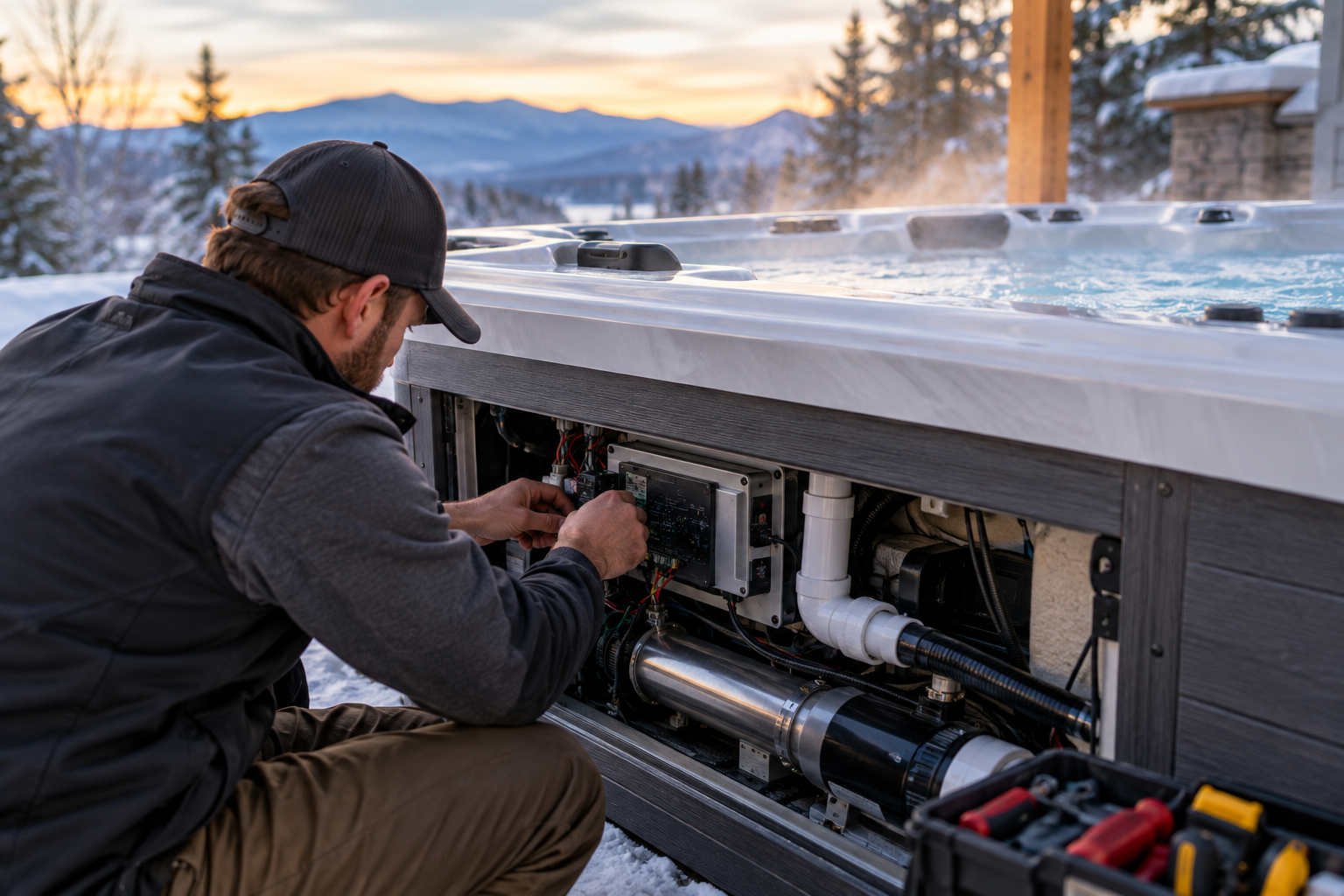
There’s nothing quite like opening your hot tub on a cold Vermont evening, expecting warm water, and discovering that it’s barely lukewarm — or downright cold. If you’re wondering, “Why is my hot tub not heating?”, the problem is often related to poor water flow, a dirty filter, low water level, a tripped breaker, a faulty sensor, a circulation problem, or an issue with the heater itself.
The good news? A hot tub that won’t heat does not automatically mean you need a new heater. Some of the most common causes are relatively simple to identify and correct.
Below, the hot tub experts at Avalon Pools & Spas in Milton, Vermont, break down eight common reasons a hot tub stops heating, what you can safely check yourself, and when it’s time to call a professional.
Why Is My Hot Tub Not Heating? The Short Answer
A hot tub typically stops heating because the heater isn’t receiving adequate water flow, power, or the proper signal from the spa’s safety and temperature controls.
Before assuming the heating element has failed, check:
- The hot tub’s water level
- The filter for dirt or clogs
- The control panel for an error code
- The temperature setting and heating mode
- The GFCI or circuit breaker
- Whether water is circulating normally
Modern hot tubs contain safety systems designed to prevent the heater from operating when conditions aren’t right. For example, if water flow becomes too low, the spa may intentionally shut down the heater to prevent overheating or equipment damage.
This means a “heater problem” can actually originate somewhere else in the system.
Here are eight common causes to investigate.
1. Your Hot Tub Filter Is Dirty or Clogged
A dirty hot tub filter can restrict water flow enough to prevent the heater from operating.
This is one of the first things worth checking when a hot tub suddenly stops heating.
Your spa needs to continuously move water through its filtration and heating systems. As a filter collects oils, lotions, minerals, dirt and other debris, water has a harder time passing through it.
If flow becomes too restricted, your hot tub’s safety systems may prevent the heater from turning on.
Other symptoms of a clogged filter can include:
- Weak jets
- Reduced circulation
- FLO or similar error codes
- Cloudy water
- Longer heating times
Inspect and clean your filter according to your hot tub manufacturer’s instructions. Filters that are damaged, heavily scaled or past their usable life may need to be replaced rather than cleaned.
Regular filter maintenance is particularly important during periods of frequent hot tub use.
2. The Water Level Is Too Low
Here’s another surprisingly simple culprit: not enough water in the hot tub.
When your water level drops too low, the circulation system may begin drawing in air instead of moving a steady supply of water. Without adequate circulation through the heater, the spa may stop heating as a protective measure.
Water levels can gradually fall because of evaporation, splash-out or frequent use.
Check that the spa is filled to the manufacturer’s recommended level. If you’re constantly adding water, however, there may be a leak that should be inspected.
For Vermont hot tub owners, low water levels deserve extra attention during the winter. A circulation or heating problem becomes much more urgent when temperatures outside are below freezing.
3. There’s a Water Flow or Circulation Problem
Even with enough water and a clean filter, your hot tub may still experience insufficient flow.
Possible causes include:
- A circulation pump problem
- A blocked plumbing line
- A closed or partially closed valve
- An airlock
- A malfunctioning flow or pressure switch
- Debris restricting circulation
Many spas monitor water movement before allowing the heater to operate. If the system doesn’t detect sufficient flow, it may shut the heater down.
You may also see an error message such as FLO, FL, LF or another flow-related code, depending on your hot tub manufacturer.
If the heating problem began immediately after you drained and refilled the spa, an airlock is another possibility. Air trapped in the plumbing can prevent the pump from circulating water correctly.
Avoid bypassing safety switches or attempting electrical repairs yourself. If normal filter, water-level and manufacturer-recommended troubleshooting doesn’t restore circulation, have the system inspected professionally.
4. The GFCI or Circuit Breaker Has Tripped
Your hot tub needs a reliable electrical supply to operate its pumps, controls and heater.
If a GFCI or breaker trips, the spa may stop heating or shut down entirely.
Check your electrical panel and hot tub’s GFCI to see whether either has tripped. Follow the reset procedure recommended by your hot tub manufacturer.
The important part comes next:
If the breaker or GFCI trips again, don’t repeatedly reset it.
Repeated tripping can indicate a problem with the heater, moisture intrusion, wiring or another electrical component. Electrical troubleshooting around a hot tub should be handled by an appropriately qualified professional.
Water and electricity are not a DIY combination worth experimenting with.
5. The Temperature Sensor or High-Limit Switch Has Been Triggered
Hot tubs contain sensors that monitor water temperature and help protect the equipment from overheating.
One of these safety devices is commonly referred to as a high-limit switch. If the system detects an unsafe temperature or condition, it can shut the heater off.
The problem isn’t necessarily the switch itself.
Restricted water flow, for example, can cause water inside the heater assembly to become hotter than expected and trigger the high-limit protection.
A faulty temperature sensor can also provide incorrect information to the control system, causing the spa to heat incorrectly or not at all.
Depending on your hot tub, sensor-related problems may trigger codes such as:
- HL
- OH
- SN
- SNS
Error-code terminology varies by manufacturer, so consult your owner’s manual before assuming what a particular code means.
If an error returns after the recommended reset or basic troubleshooting, professional diagnosis is usually the safer next step.
6. The Heating Element Has Failed
Sometimes, the heater really is the problem.
A hot tub heating element works by transferring heat to the water as it moves through the heater assembly. Over time, heating elements can deteriorate, develop scale, corrode or fail electrically.
Poor water chemistry can accelerate this process.
For example, mineral scale can accumulate on spa equipment when water chemistry isn’t properly maintained. Corrosive water conditions can damage components as well.
Possible signs of heater failure include:
- Water remains cold despite normal circulation
- The hot tub heats very slowly
- The GFCI trips when the heater activates
- Other common flow problems have been ruled out
Determining whether an element has actually failed generally requires electrical testing. That’s a job better left to an experienced spa technician rather than replacing parts based on guesswork.
7. The Pump Isn’t Circulating Water Properly
Your heater and circulation system work together.
If the pump responsible for moving water through the heating system isn’t operating correctly, your hot tub may have perfectly functional heating equipment but still fail to warm the water.
Watch for symptoms such as:
- Little or no water movement
- Unusually weak circulation
- Strange pump noises
- Humming without normal operation
- Intermittent circulation
- Flow-related error codes
A pump issue can have several causes, ranging from an airlock or obstruction to a mechanical or electrical failure.
This is another reason diagnosing a “hot tub heater problem” requires looking at the spa as a complete system rather than immediately replacing the heater.
8. Your Hot Tub Is Losing Heat Faster Than It Can Produce It
What if the hot tub is heating — just not enough?
This distinction matters.
During a Vermont winter, your spa may be fighting outdoor temperatures well below freezing. A damaged or poorly insulated cover can allow significant heat to escape, making it seem as though the heater isn’t doing its job.
Check your cover for:
- Sagging
- Cracks or damage
- Gaps around the shell
- Waterlogged insulation
- Poor fit
- Deteriorated foam
Also make sure cabinet panels are properly secured and the spa’s insulation hasn’t been disturbed or damaged.
If your water temperature increases but struggles to reach or maintain the temperature you’ve selected, excessive heat loss may be part of the problem.
A quality, well-fitting hot tub cover is especially important for homeowners throughout Milton, Burlington, Colchester and northern Vermont, where hot tubs have to work considerably harder during cold winter weather.
What Should You Check First If Your Hot Tub Isn’t Heating?
Before scheduling a repair, there are several safe, simple things you can check.
Start with these five steps:
- Confirm that the water level is correct.
- Inspect and clean the hot tub filter.
- Look for an error code on the control panel.
- Confirm the temperature and heating mode are set correctly.
- Check whether the GFCI or breaker has tripped.
If your spa still isn’t heating, or an error code continues to return, the issue may involve the pump, sensors, flow switch, heating element, control system or another internal component.
At that point, professional troubleshooting can save you from replacing a perfectly good part while overlooking the actual cause.
Why Hot Tub Heating Problems Are More Urgent in Vermont
A hot tub not heating in July is frustrating.
A hot tub not heating when it’s 10°F outside can become an equipment emergency.
When temperatures fall below freezing, water sitting inside plumbing lines and equipment can freeze. Water expands as it freezes, potentially damaging pipes, pumps, fittings and other spa components.
That’s why Vermont hot tub owners shouldn’t ignore a heating or circulation failure during the winter.
If your hot tub loses heat during freezing weather, don’t simply turn it off and leave it filled with water. A spa that will remain shut down in freezing conditions needs to be properly winterized so residual water doesn’t freeze inside the plumbing and equipment.
Hot Tub Repair and Maintenance in Milton, VT
Sometimes a dirty filter is all that’s standing between you and a hot soak. Other times, your spa is telling you there’s a larger equipment problem.
Avalon Pools & Spas provides professional hot tub repair and maintenance in Milton, VT, and surrounding Vermont communities, including troubleshooting for spa pumps, heaters, plumbing leaks and other equipment issues.
Our team understands what hot tubs go through during Vermont’s long winters and can help identify the cause of heating problems before a minor issue becomes a much more expensive repair.
Whether your hot tub isn’t heating at all, won’t maintain its temperature, is displaying an error code or isn’t circulating correctly, Avalon can help get to the root of the problem.
Need help with a hot tub that won’t heat? Contact Avalon Pools & Spas in Milton, Vermont, to schedule professional hot tub service or repair.
Frequently Asked Questions About Hot Tubs Not Heating
Why is my hot tub running but not heating?
If your hot tub has power and appears to be running but the water isn’t heating, check the filter and water level first. Restricted water flow can prevent the heater from activating even though other parts of the spa continue to operate. Other possibilities include a faulty sensor, flow switch, heating element or control-system problem.
Why is my hot tub not heating after I changed the water?
If your hot tub isn’t heating after a drain and refill, an airlock may be preventing proper water circulation. Also verify that the water level is correct, the pump is circulating normally and the spa isn’t displaying a flow-related error code.
Can a dirty hot tub filter cause the heater not to work?
Yes. A clogged filter can reduce water flow through the heating system. Many hot tubs are designed to prevent the heater from operating when water flow is insufficient, helping protect the heater and other equipment from damage.
Why is my hot tub heating slowly?
Slow heating can be caused by cold starting water, low outdoor temperatures, restricted water flow, a dirty filter, heat loss through a damaged cover or a problem with the heating system. In Vermont winters, extremely cold outdoor temperatures can make heat retention especially important.
Why won’t my hot tub reach the set temperature?
If the water gets warm but won’t reach the temperature selected on the control panel, check your heating mode, filter, water circulation and cover. A poorly fitting or waterlogged cover can contribute to significant heat loss. Sensor or heater problems may also prevent the spa from reaching the desired temperature.
What does FLO mean on a hot tub?
A FLO or flow-related error generally indicates that the spa isn’t detecting sufficient water flow through the system. Common causes include a dirty filter, low water level, airlock, circulation problem or malfunctioning flow switch. Exact error-code meanings vary by hot tub brand and model.
Why does my hot tub breaker keep tripping when the heater comes on?
Repeated GFCI or breaker tripping can indicate an electrical fault involving the heater or another component. Don’t continue resetting a breaker that repeatedly trips. Have the spa inspected by a qualified professional.
Can a hot tub freeze if the heater stops working?
Yes. If a hot tub loses heat and circulation during freezing weather, water inside its plumbing and equipment can eventually freeze and cause serious damage. This is particularly important in Vermont. If your spa stops heating during a hard freeze, address the problem promptly rather than shutting it down and leaving water inside.
How do I know if my hot tub heating element is bad?
Possible signs include water that doesn’t heat despite normal circulation, unusually slow heating, or a GFCI that trips when the heater activates. However, several other problems can produce similar symptoms. Proper diagnosis may require electrical testing by an experienced technician.
When should I call for hot tub repair?
Call a professional if your breaker repeatedly trips, the spa displays persistent error codes, circulation isn’t working, the heater still won’t operate after basic filter and water-level checks, you suspect an electrical problem, or your hot tub loses heat during freezing Vermont weather.
Need Hot Tub Repair Near Milton, Vermont?
Don’t let a cold hot tub turn into frozen plumbing or damaged equipment.
If you’ve checked the basics and your hot tub still isn’t heating properly, contact Avalon Pools & Spas in Milton, VT for professional troubleshooting, hot tub maintenance and repair. Our experienced team can inspect your spa, determine what’s preventing it from heating and recommend the right solution to get you back in warm water.